
Gisela Walter · 5 November 2026
Polish Vocational Centers Blend AI Ethics Training with Sustainability Modules After Regional Funding Increases Spur Enrollment Jumps in Eco-Focused Programs
Regional funding allocations in Poland have expanded support for vocational education programs since 2025, and centers across several voivodeships now combine AI ethics instruction with sustainability coursework as enrollment in environmental tracks rises sharply. Data from the Polish Ministry of Education and Science indicate that applications for eco-oriented vocational tracks increased by 28 percent between January and October 2026, while centers in Mazovia, Silesia, and Lesser Poland reported the largest gains following targeted subsidies for equipment upgrades and faculty development.
Funding Shifts Drive Program Expansion
Allocations from the National Recovery and Resilience Plan channeled additional resources into vocational infrastructure, and administrators at facilities such as the Vocational Training Center in Katowice used those resources to purchase simulation software for AI decision-making scenarios alongside modules on circular economy practices. Observers note that these investments coincided with revised curriculum guidelines issued by regional education boards in late 2025, which encouraged the pairing of technical AI content with environmental impact assessments. Figures from the Central Statistical Office show that full-time enrollment in sustainability-focused vocational certificates reached 14,200 students by November 2026, compared with 11,100 the previous year.
Integration of AI Ethics and Sustainability Content
Instructors at participating centers deliver joint sessions in which students examine algorithmic bias within resource-allocation models while calculating carbon footprints of proposed supply chains. One program at the Kraków Vocational Institute requires learners to evaluate case studies of AI systems used in waste-management logistics, and participants document both ethical concerns and measurable sustainability outcomes in project reports. The approach aligns with recommendations published by the European Centre for the Development of Vocational Training, which highlight the value of cross-disciplinary modules that connect digital competencies with environmental objectives. Cedefop publications describe similar pilots underway in other member states.
Enrollment Trends and Regional Patterns
Enrollment jumps appear most pronounced in programs that advertise combined credentials, and administrators report that applicants frequently cite future job prospects in green technology sectors as a primary motivation. Data compiled by regional labor offices indicate that 62 percent of graduates from the 2025 cohort secured positions within six months, many with firms involved in renewable energy installation or environmental monitoring services. In November 2026, centers in Opole and Podlaskie announced additional cohorts to accommodate waiting lists that exceeded capacity by 35 percent. Researchers tracking these developments point to alignment with EU Green Deal targets as a factor sustaining institutional interest.
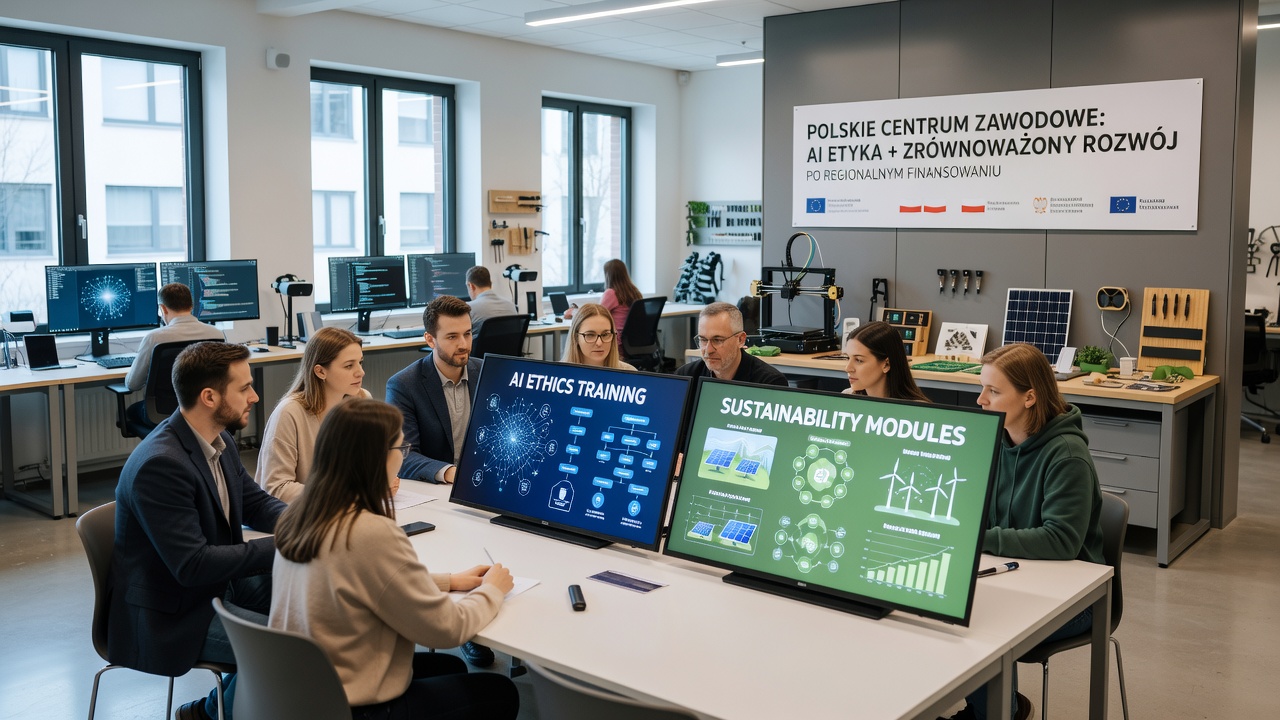
Partnerships with local industries supply real-world datasets for classroom exercises, and students analyze sensor data from manufacturing sites to identify both efficiency gains and potential ethical risks in automated oversight systems. These exercises occur within dedicated laboratory blocks that run parallel to traditional trade skills such as electrical installation and mechanical maintenance. Records maintained by the participating centers document an average of 48 instructional hours per semester allocated to the integrated AI ethics and sustainability content.
Faculty Preparation and Resource Allocation
Regional authorities sponsored summer training institutes in 2026 that equipped 340 instructors with updated materials on AI governance frameworks and life-cycle assessment methods. Participants completed projects that mapped ethical review processes onto existing environmental management standards, and follow-up surveys conducted by the National Centre for Supporting Vocational and Continuing Education recorded high rates of curriculum adoption within the first academic term. Budget reports indicate that 22 percent of the new regional funds supported these professional development activities, while the remainder covered hardware acquisitions and student scholarships.
Outcomes Observed by Mid-2026
Early outcome measures collected through graduate tracking systems show increased placement rates in roles that require both digital literacy and environmental compliance knowledge. Centers report that collaborative projects completed during the fall 2026 term addressed topics such as optimizing energy use in public buildings through machine-learning tools while maintaining data-privacy standards. According to figures released by the OECD Directorate for Education and Skills, vocational systems that embed cross-cutting competencies demonstrate stronger retention through the second year of study. OECD education indicators place Poland among countries expanding such integrated offerings at the upper-secondary level.
Conclusion
Regional funding increases have enabled Polish vocational centers to expand eco-focused programs that now incorporate AI ethics training alongside sustainability modules, and enrollment data through November 2026 reflect sustained student interest. The documented integration of these content areas continues to evolve as centers refine instructional sequences and strengthen ties with local employers. Continued monitoring by education authorities will track long-term effects on graduate employment and skill acquisition in the coming years.