Ulrich Friedrich · 19 November 2026
Industry-Academia Ties Drive Shifts in Research Priorities Across Technical Disciplines
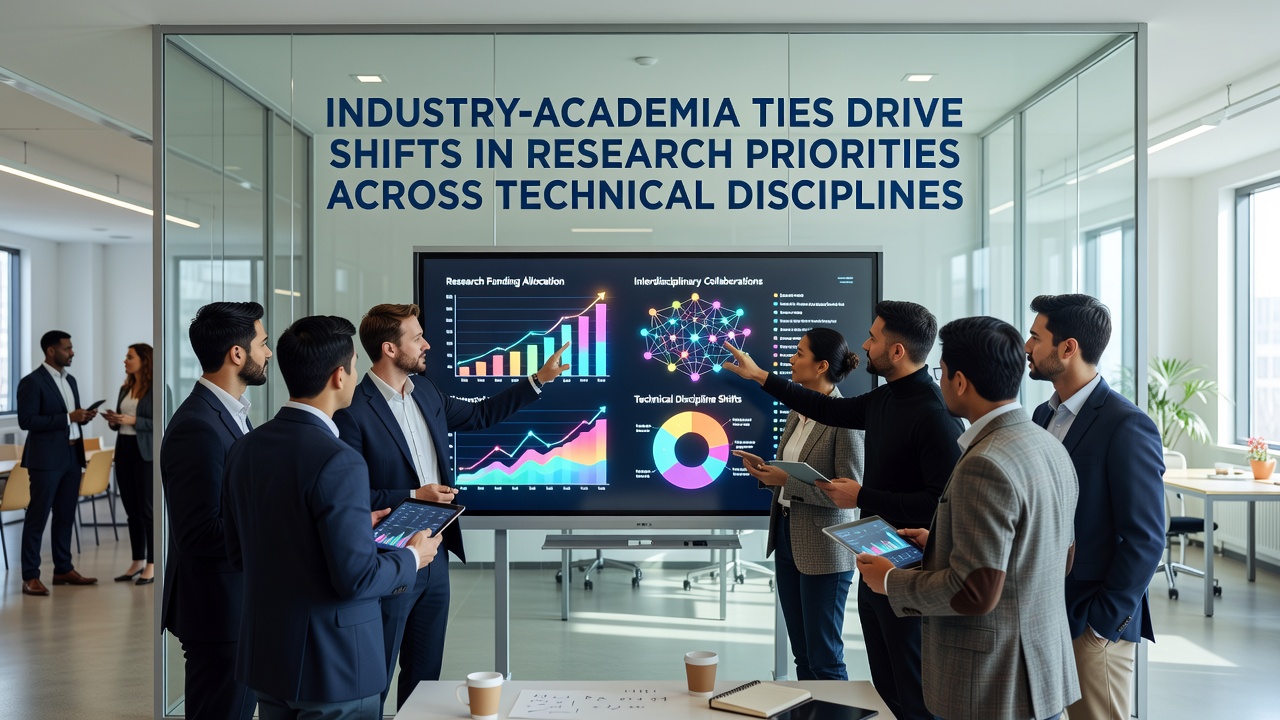
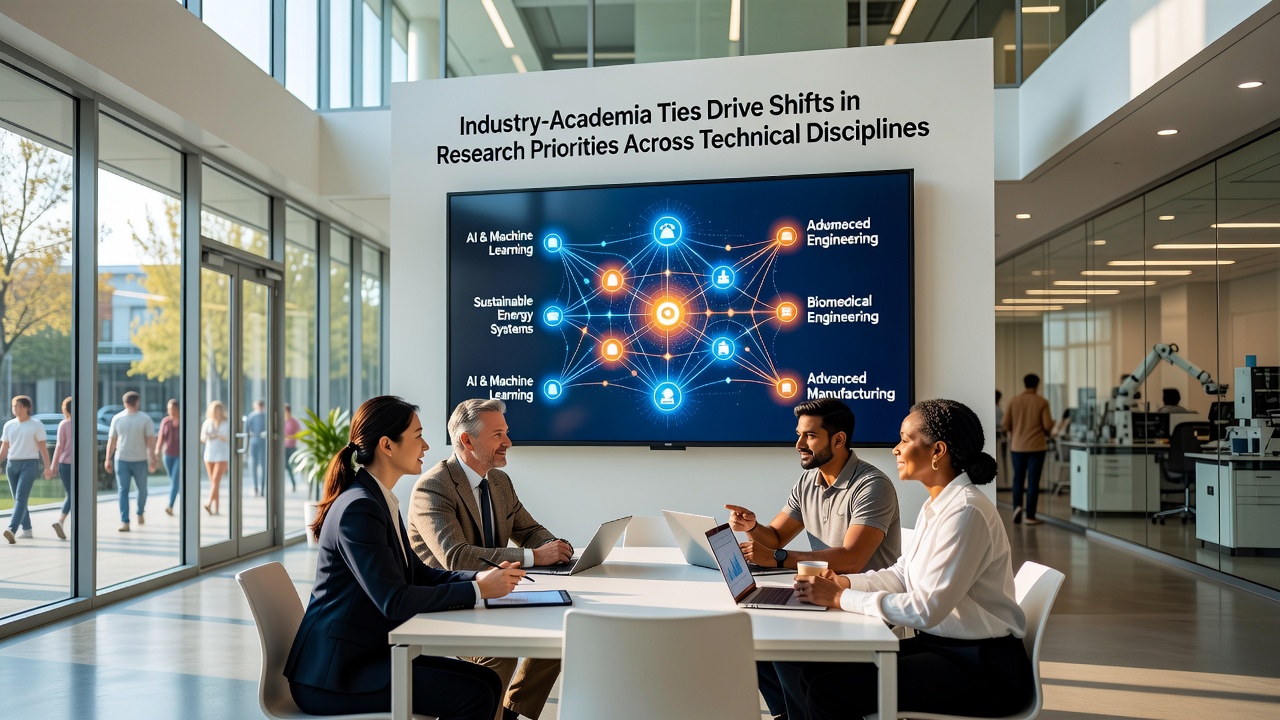
Partnerships between universities and companies have reshaped how technical research gets funded and directed, with priorities moving toward applied outcomes in fields like artificial intelligence, materials engineering, and renewable energy systems. Data from multiple tracking organizations shows increased joint projects since the mid-2010s, and observers note that these arrangements often steer academic teams toward questions with near-term commercial relevance rather than purely theoretical exploration.
Funding Patterns and Priority Adjustments
Grants tied to industry contributions now account for growing shares of research budgets in engineering and computer science departments, according to figures released by the National Science Foundation. Teams that once focused on foundational algorithms have redirected efforts toward scalable applications in autonomous systems, while materials scientists increasingly examine properties suited to manufacturing scale-up. This adjustment happens because companies provide equipment access, data sets, and co-author opportunities that pure government awards rarely match.
What's notable is how these ties influence publication trends. Studies released ahead of the November 2026 academic cycle reveal higher citation rates for papers listing both academic and corporate affiliations, especially in journals covering robotics and sustainable chemistry. Researchers at institutions with formal industry liaison offices report faster access to specialized facilities, which in turn accelerates iteration cycles on prototypes.
Discipline-Specific Changes
In computer engineering programs, priorities have pivoted from general machine learning theory toward edge computing and privacy-preserving techniques demanded by hardware manufacturers. One multi-year collaboration between a Midwest university and a semiconductor firm produced new benchmarks for low-power inference models that later appeared in consumer devices. Similar patterns appear in chemical engineering, where academic groups now emphasize catalyst design compatible with existing refinery infrastructure rather than entirely novel processes.
Electrical engineering departments show parallel movement, with increased emphasis on power electronics for electric vehicle charging networks. Reports compiled by the Australian Research Council document how joint labs between universities and automotive suppliers have produced patents on bidirectional inverters that feed energy back into grids. These outcomes reflect deliberate choices to align dissertation topics with stated corporate roadmaps, and the resulting work often receives continued support once initial prototypes demonstrate viability.
Geographic Distribution of Collaborations
European technical universities have formed consortia that pool resources from multiple firms, allowing smaller departments to participate in large-scale testing without bearing full costs. In Asia, national programs in South Korea and Singapore link university labs directly to export-oriented manufacturers, creating pipelines where student projects feed into production lines. North American examples tend to center on defense-adjacent applications, though civilian sectors such as telecommunications have also expanded their involvement.
Observers tracking these arrangements point out that success often depends on clear intellectual property agreements established at the outset. When terms allow academic teams to retain publication rights while granting companies licensing options, output remains high. Cases where negotiations drag on see projects stall, and participants shift attention elsewhere.
Measurement of Research Direction Changes
Surveys of department heads indicate that grant proposal language now routinely includes sections on potential industry uptake, even when the core funding comes from public agencies. This language influences peer review scores, which in turn shapes what questions receive resources. Longitudinal data sets covering the past decade show a measurable drop in papers classified as purely basic research within technical fields, accompanied by rises in those tagged with application keywords.
Yet the shift does not eliminate curiosity-driven work entirely. Many collaborations reserve portions of budgets for exploratory subprojects that may not yield immediate products. Faculty members describe these as necessary for training graduate students who later move into either sector, and the arrangement keeps pipelines open for unexpected findings that companies later adopt.
Conclusion
Industry-academia linkages continue to recalibrate research agendas in technical disciplines through shared funding, equipment, and personnel exchanges. The patterns observed through 2026 suggest these connections will remain central to how priorities evolve, with outcomes visible in both the topics selected for study and the speed at which results move from lab to deployment. Tracking mechanisms maintained by government and international bodies provide ongoing visibility into the balance between applied and foundational efforts across regions.